1. Proper home care:-
With the right care, most minor cuts should heal in about a week. Follow these steps to accelerate healing:
- Start by washing your hands to prevent infection when treating the cut.
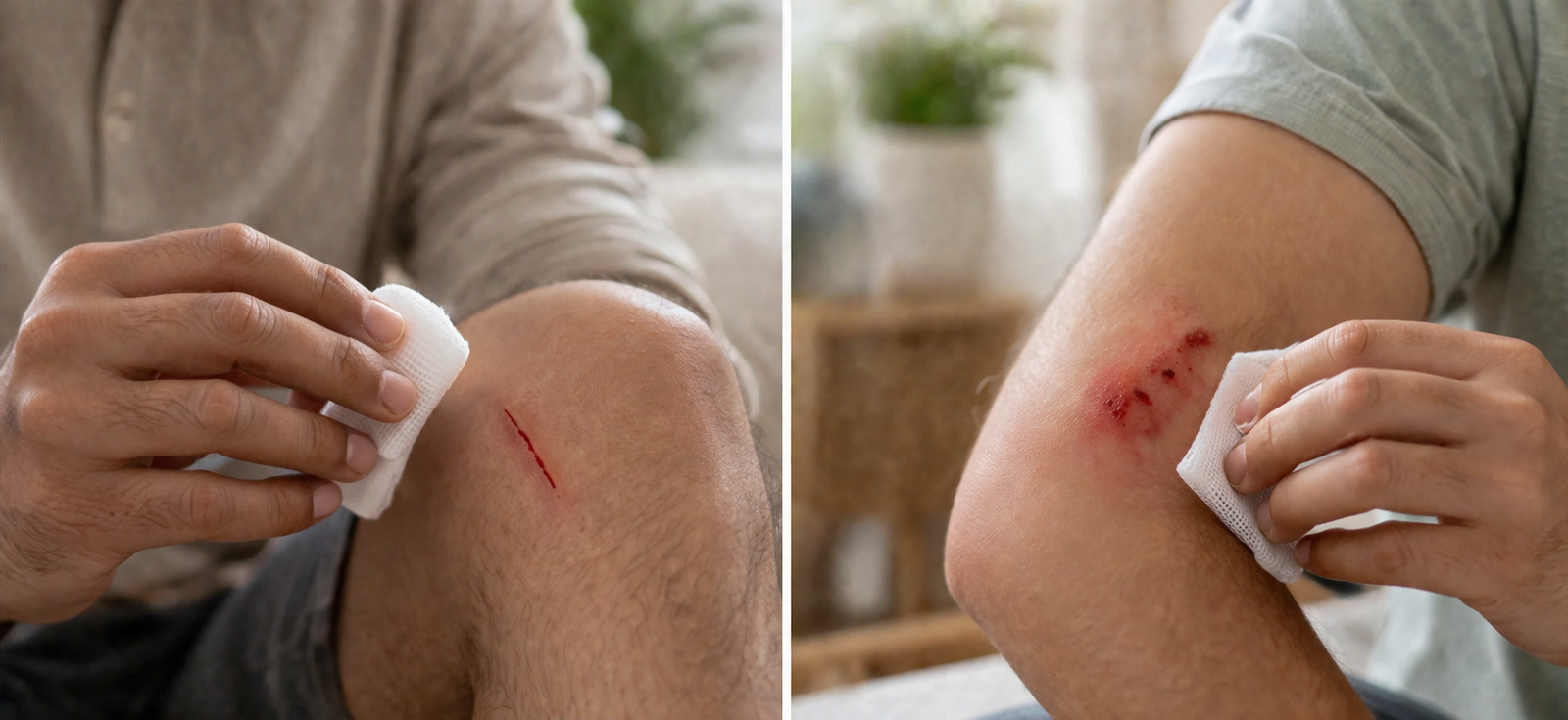
- If the cut is still bleeding, press gently with a piece of gauze or a clean cloth. Keep the pressure for at least two minutes or until the bleeding stops.
- Clean the cut with cool or lukewarm water and mild soap. You can also use a mild saline solution if available. While cleaning, look for any dirt or bits of debris in the wound and rinse them out.
- Pat it dry with a clean towel.
2. Apply a thin layer of antiseptic cream:-
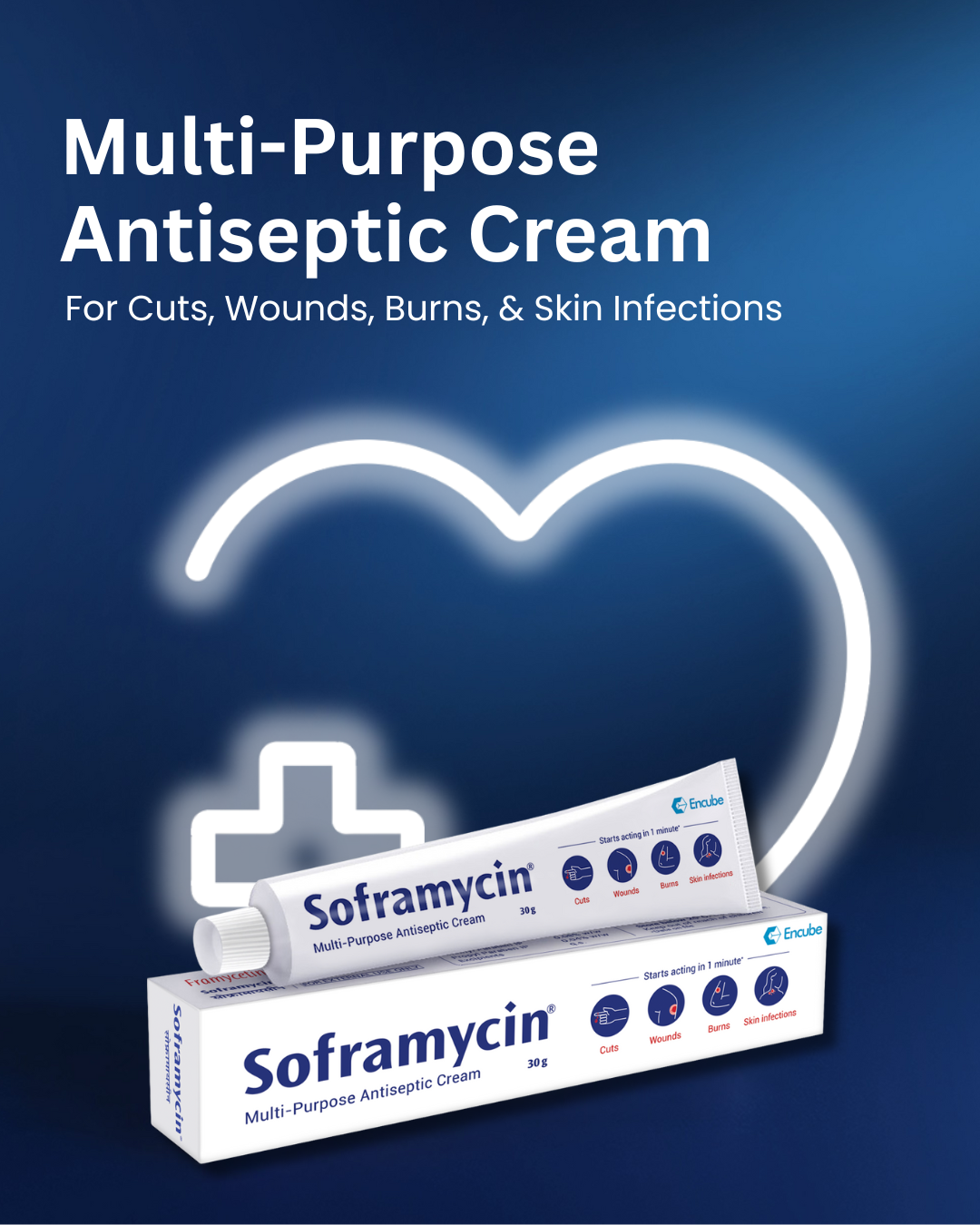
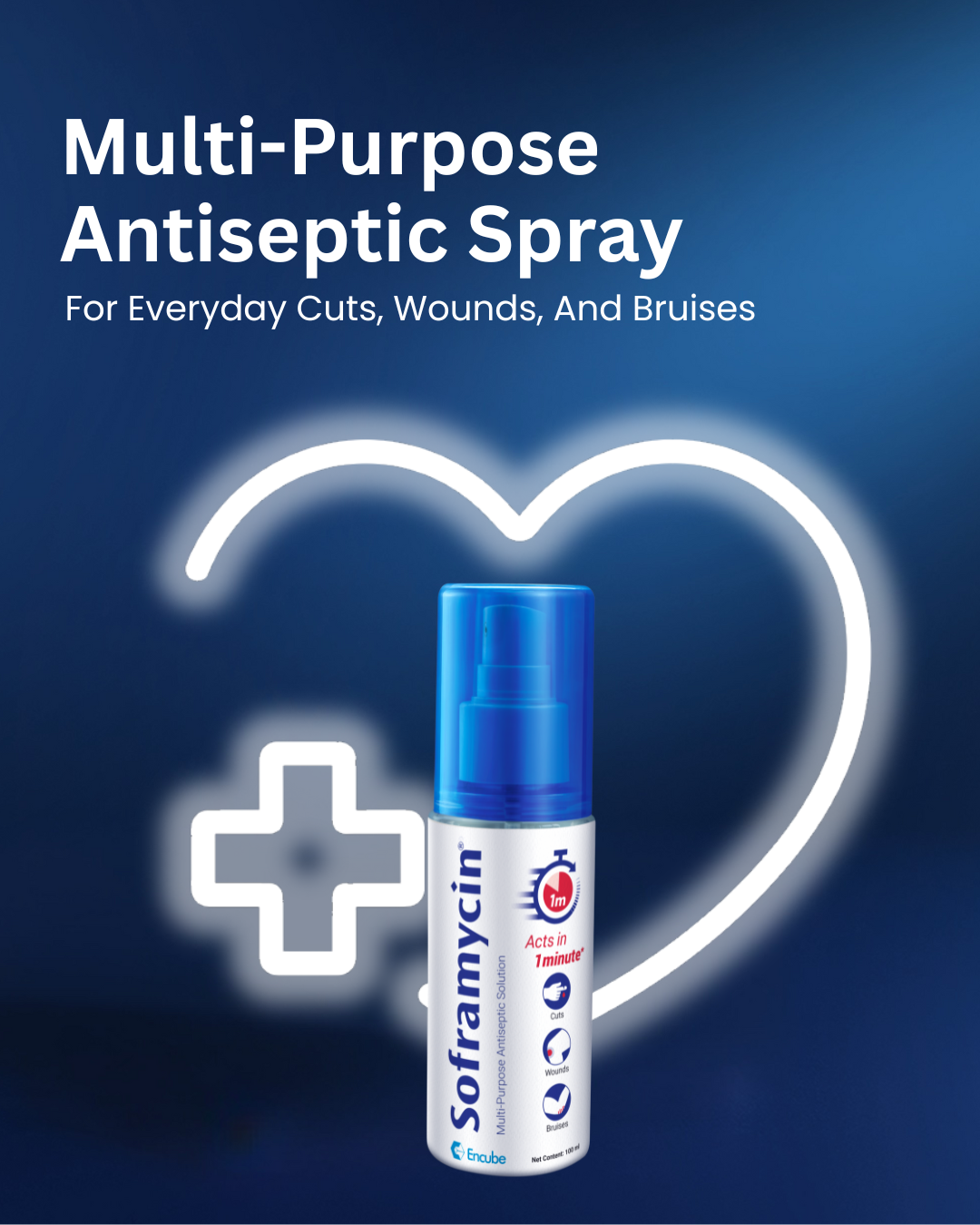
Applying a small amount of Soframycin Multi-Purpose Antiseptic Cream helps cuts and scrapes heal faster while protecting and caring for your skin. Avoid using it near the mouth, eyes, and other sensitive areas, and use it as directed by a doctor.
3. Cover the cut with a sterile bandage to protect it from germs:-
Keeping the wound covered also helps it stay moist and prevents it from opening again. Change the bandage daily, or more often if it gets wet or dirty.
4. Make sure you’ve had a tetanus shot:-
Tetanus bacteria can get into your body through even a small cut. Hence, getting a tetanus booster every 10 years is recommended. Check your vaccination status to make sure it’s up to date.
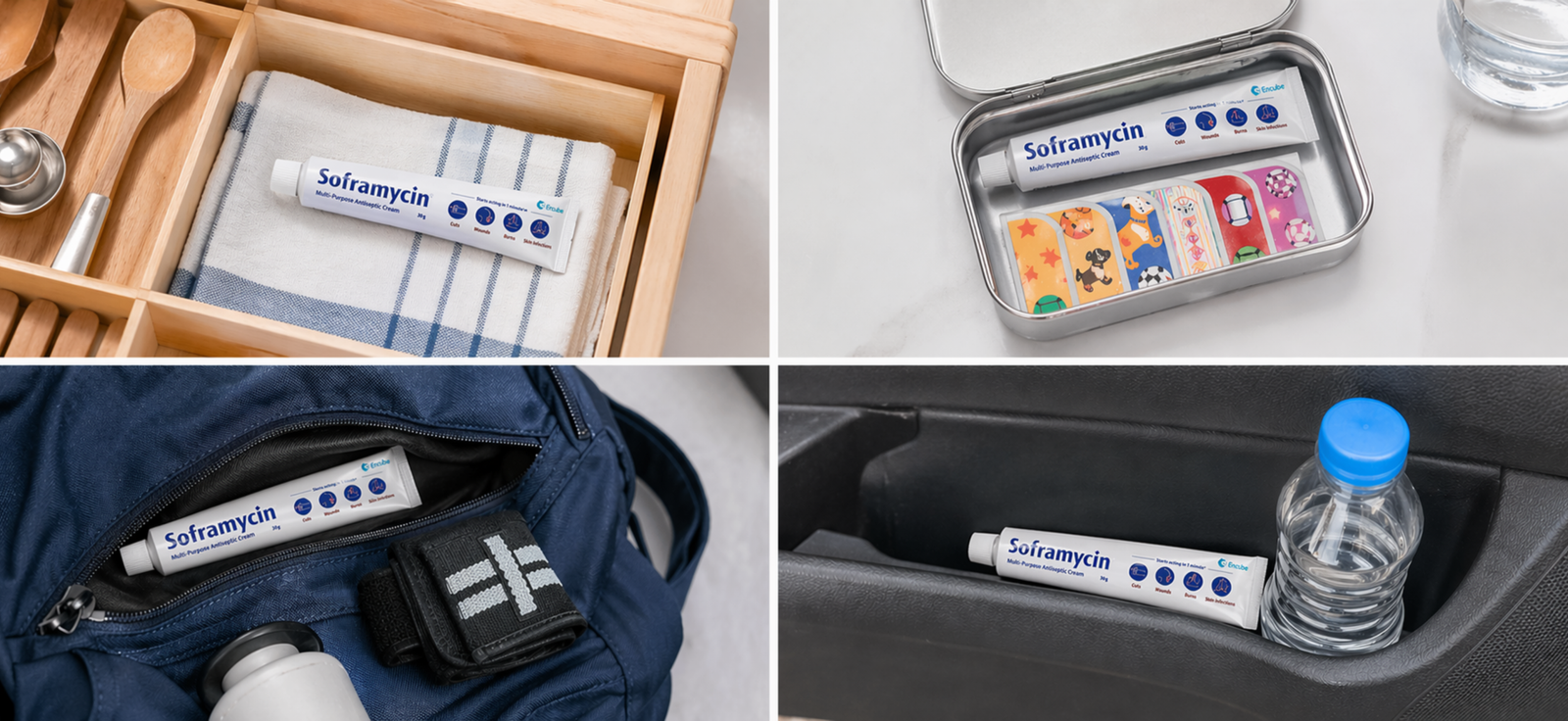
Every home should have a first aid kit for treating minor injuries. It’s a good idea to keep one in your car and at work too. You can buy readymade kits at most drug stores, or you can put together your own with these basic items:
- 2 absorbent dressings (5 x 9 inches)
- About 25 adhesive bandages of different sizes
- 1 adhesive cloth tape (10 yards x 1 inch)
- An antiseptic cream
- 5 antiseptic wipe packets
- 2 packets of aspirin
- 1 instant cold compress
- 2 pairs of rubber gloves
- 2 roller bandages (3 and 4 inches each)
- 10 sterile gauze pads
- Tweezers
- A chit mentioning emergency first aid instructions
5. Check the kit for medicine expiration dates and stock:-
Replace any used medicines, creams, or supplies and check their expiration dates. You can also include your regular medicines and mention emergency phone numbers. If you’re unsure how to treat a cut or scrape, it’s best to visit a doctor or hospital.
Signs of Infection
Ignoring minor cuts can be dangerous. Germs on your skin can enter your body through them and cause an infection, leading to discomfort and delaying the healing process. In some cases, it can even lead to serious problems like gangrene, bone infections, or sepsis. Signs of infection after a cut include:
- Redness near the cut
- Red streaks spreading from the cut
- Pain, swelling, or increased tenderness around the cut
- Fever
- Yellow, white, or green fluid flowing from the cut
If you notice any of these signs, call your doctor right away. They may prescribe antibiotics or other treatments to help.
Conclusion
If you’re looking for home remedies, you can use Soframycin cream. It contains Framycetin, which helps treat infected cuts, wounds, and minor burns. The cream stops bacteria from growing while relieving symptoms. Its gentle and effective formula heals, protects, and cares for your skin while treating scrapes. Clean and dry the affected area before applying the cream, and wash your hands later.