What are the types of burns?
Before applying ointments for burns, the wound must be assessed in terms of seriousness in order to diagnose accurately for the health and well-being of the patient. There are largely three categories of burns, depending on the degree to which the skin has been affected:
- First-degree burns:
Very superficial, only involving the outer layer of skin and red, dry, and mildly painful. Think sunburn treatment or a minor scald from hot water, all painful but generally treatable at home with good first aid and burn medication.
- Second-degree burns:
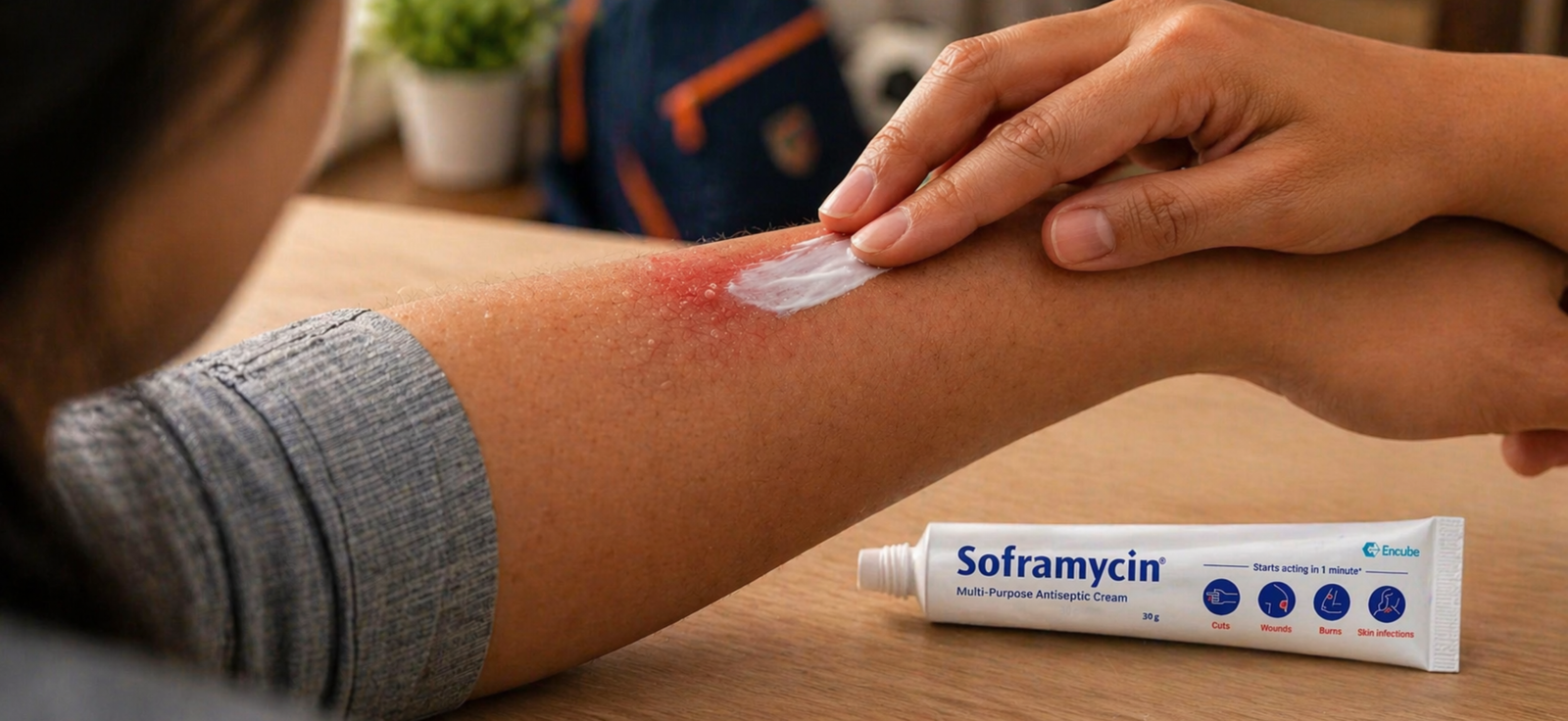
These are deeper and go down to the dermis. These are painful and red, and they develop blisters of fluid around the affected area. They have a shiny surface and should be handled very carefully for infection and scarring with the correct medicine like the Soframycin Multi-Purpose Antiseptic Cream, one of the best ointments for burns.
- Third-degree burns:
They are deep burns that burn down to ashes all of the skin’s layers, tissues, and other elements. The skin can also be leathery, waxy, charred, or become white, and actually, is not even painful initially because there is loss of nerve sensation. Emergency burn management and surgery are required in such cases.
How to treat burns?
The majority of minor burns can be treated immediately if you have an idea of how to treat burns at home. Minor burns will heal within a fortnight. For severe burns, following first-aid and the doctor’s advice for your burns, treatment could involve one or more of the following: drugs, wound dressing, therapy and surgery. Treatment purposes include pain relief, debriding dead tissue, infection prevention, scarring risk minimization and restoring function.
People with severe burns can require treatment in burn centers, besides application of Soframycin cream for burns. They may require skin grafts to close large wounds. And they may require counseling and follow-up care for months, including physical therapy.
First aid for severe burns
For severe cases, learning how to treat burns at home with first aid will help until a doctor arrives:
- Protect the burned individual from further harm. If you can do so without putting yourself in danger, take the victim you are helping away from the heat source.
- Check the burned individual for breathing. If needed, begin rescue breathing if you are trained to assist this way.
- Take off jewellery, belts and other tight-fitting clothing, especially from the burned area and around the neck. Burned tissue swells quickly.
- Loosely bandage the site with gauze or a clean towel.
- Position the wound above the heart, if at all possible
- Monitor for shock, which is signified by cool and damp skin; weak pulse; and shallow breathing.
Medical care
Medications and preparations which can promote healing of extensive burns are:
- Water therapy: Your medical professionals may utilize methods such as whirlpool baths to aid debridement of dead tissue.
- Preventing dehydration: Intravenous fluids (IV) can be administered to avoid dehydration and organ failure.
- Pain and anxiety medication: Burns hurt a lot. You can be given pain and anxiety medication when bandages are changed.
- Burn creams and ointment: In case you are not taken to a burn unit, your care team may use numerous ointments on the skin, such as topical antibiotics or antiseptic creams as prescribed by a doctor in order to treat and prevent infection.
- Dressings: Your healthcare team may also place a variety of specialty wound dressings to prepare the wound to heal. If you are being transferred to a burn unit, your wound will probably be covered with dry gauze alone.
- Tetanus shots: Your health care team may guide you to have a tetanus shot after a burn injury.
Physical and occupational therapy
If the burn is large or involves any of the joints, you may be instructed to do some physical therapy exercises. These will extend the skin so that the joints remain flexible. Besides using Soframycin cream on burns, you may try some home remedies on how to treat burns at home and regain mobility, like doing exercises to increase muscle power and coordination. Occupational therapy can help if you’re having difficulty with your daily activities.
What not to do
- Don’t cool the burn with cold water.
- Don’t pop the blisters, as they provide a protective barrier against infection. If a blister happens to pop, clean it gently with water and, if you wish, liquid soap. Put antiseptic ointment on it. Stop using the ointment if a rash erupts.
- Don’t use a fluffy cotton dressing.
- Avoid applying ointments immediately after a burn. Apply only after cooling and proper cleaning.
- Don’t try to remove clothes that are stuck on the burn.
Conclusion
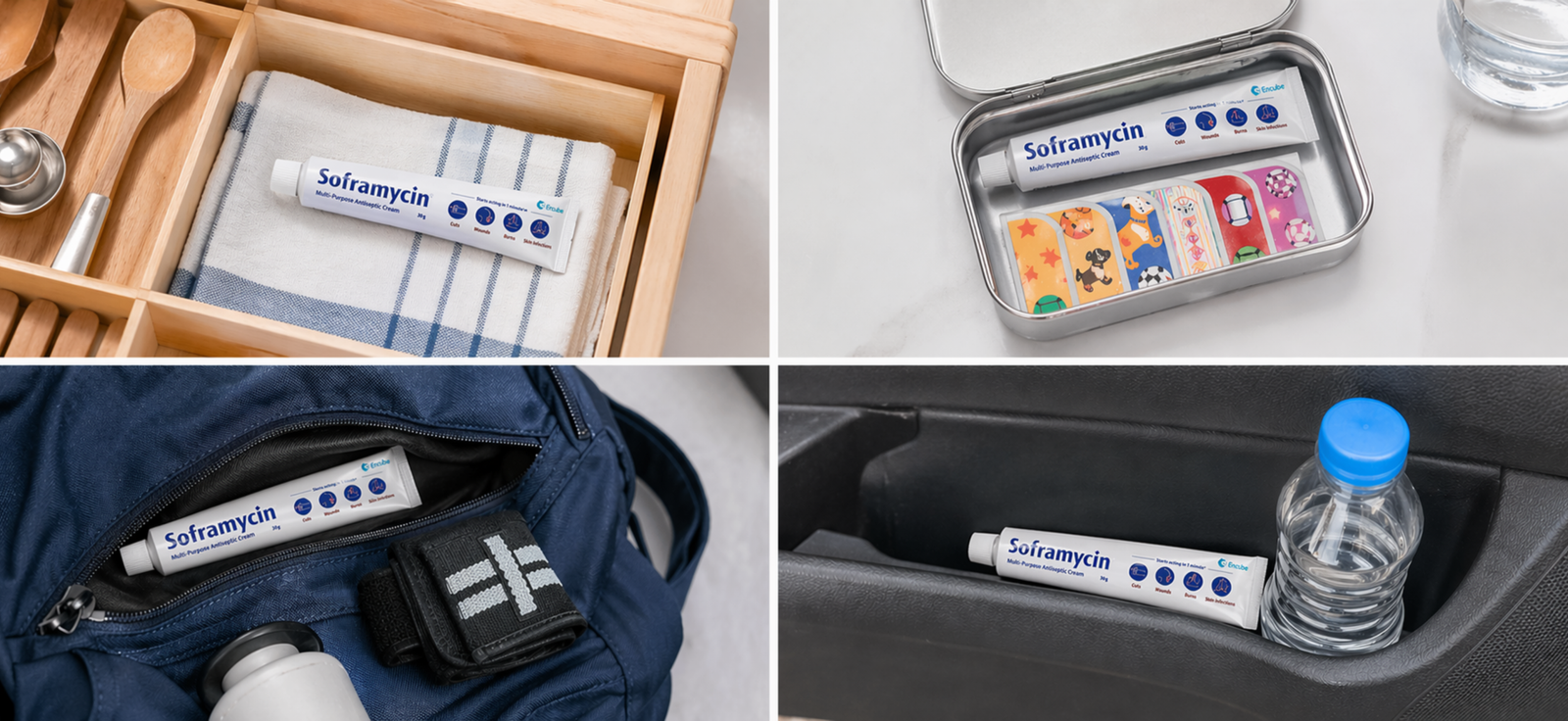
Go for emergency medical attention for deep or hand, foot, face, groin, large joint, or extensive body surface burns. You can also buy Soframycin cream for burns after medical treatment. It is an antiseptic skin-friendly cream which has been tried extensively to avoid future scars and kills 99% bacteria. You get up to 8 hours of protection with its stain-free formula. Soframycin has a trusted legacy of 50+ years, making it a renowned brand at home, in hospitals, workplaces, etc.